

Creation Beyond Competition
Many photographers spend their lives searching for significance. Often, that search becomes a competition: best photographer in the city, top photographer in the region, award-winning, most recognized, most followed, most booked.
There is nothing inherently wrong with recognition. Awards can open doors. They can place work before people who might otherwise never see it. But when significance is confused with ranking, something is lost. A ranking can tell us who was rewarded inside a particular system. It cannot always tell us who is asking the necessary questions. It cannot tell us who is making work that shifts how we see ourselves, our families, our bodies, our histories, or our time.
Creation beats competition because creation begins where comparison ends. The artist's task is not simply to be better than the person beside him. It is to make something that could only have come through his life, his attention, his wounds, his discipline, his way of seeing. A competition can recognize that. But it cannot replace it.
Significance, to me, is not being named the best. It is making work that carries cultural weight — work that does not merely repeat what the culture already rewards, but questions what the culture has taught us to admire, ignore, fear, or desire. And this matters because what we believe we see can shape what we believe is true.
Recognition Is Not Empowerment
Take the word empowerment. It is a beautiful word, but I have become cautious with it. To photograph a woman and suggest that the portrait will empower her can sound generous, but it also places the artist in a position I do not believe he should occupy. I do not give a woman her power. She already has it. My work is not to grant it, decorate it, or manufacture it for her. My work is to create the conditions in which it can be seen.
Sometimes that means moving past performance. Sometimes it means waiting beyond self-consciousness. Sometimes it means allowing the masks we all learn to wear to fall away. With her permission, the portrait can reveal what was already there. That is not empowerment as a gift from the artist. It is recognition.
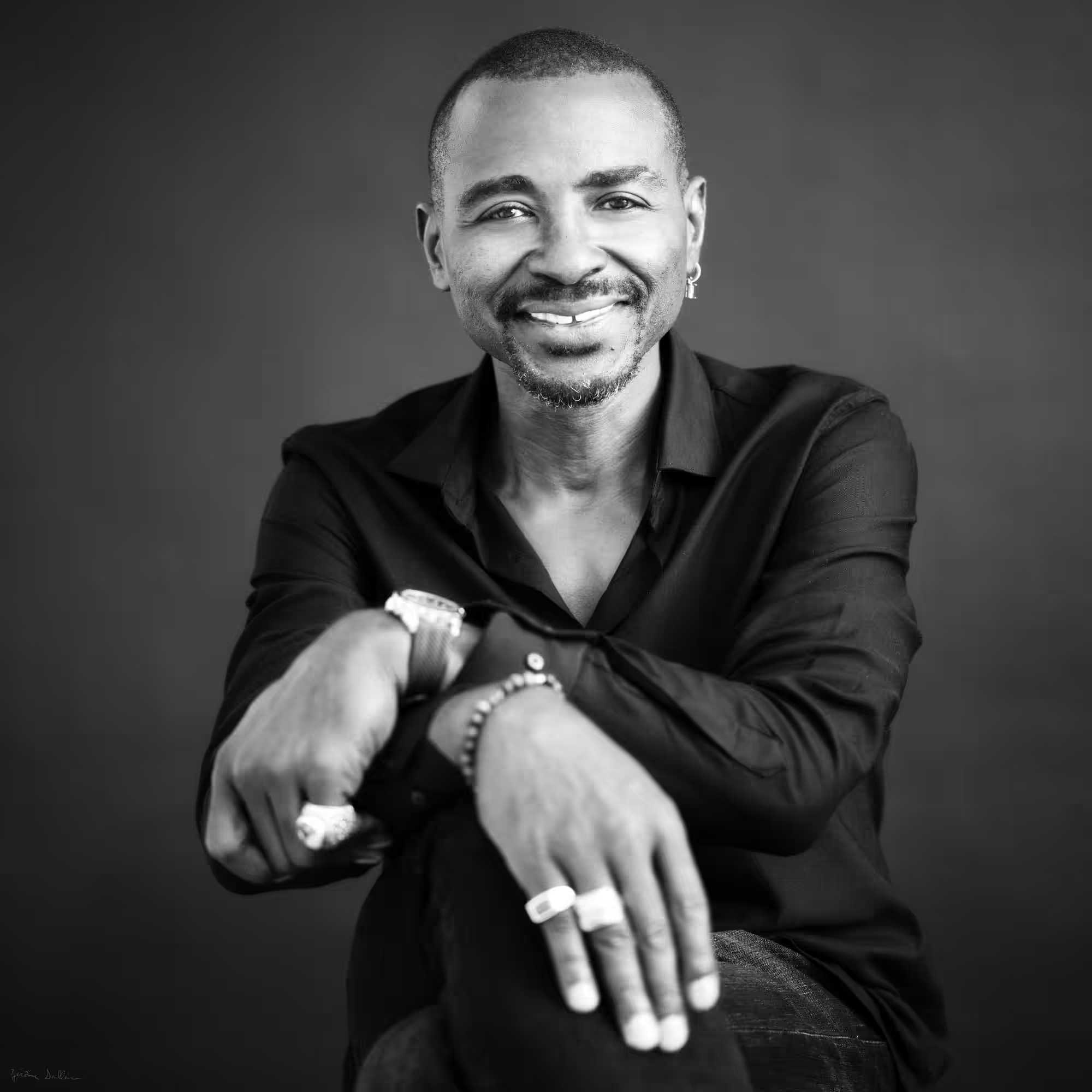
As artists, we often believe we are fighting the good fight. But we can still stand on the wrong side of seeing without knowing it. The words we attach to our work matter, but they are not what ultimately carries the work. What carries the work is the relationship we build with the person in front of us. The trust. The listening. The responsibility of the gaze. Because what we believe we see is not always what is there.
The Standards We Inherit
For decades, colour photography was calibrated around white skin. Kodak's Shirley cards, used by labs as a standard for colour correction and quality control, centred a white woman's skin tone as the reference point. If Shirley looked right, the print was considered right. But that meant the system itself had already decided what “correct” skin looked like.
For photographers unaware of these technical and cultural assumptions, the failure could appear to belong to the subject. A Black subject might not be rendered with the same depth, luminosity, or care in the final print — not because their skin was difficult, but because the standard had not been built around seeing them fully.
Trust Before the Portrait
How many times have Black clients asked me, before I even lifted the camera, whether I knew how to photograph them? How many times had they received photographs in which they could not recognize their own beauty, presence, or dignity? And how many times did they believe the failure was theirs?
Usually it begins with a phone call. The practical question is simple: what should we wear for the portrait session? I often suggest dark clothing because it is neutral. It allows the focus to return to the face, the hands, the relationship, the presence. But with some clients, the question quickly becomes something else. I have dark skin. Will that still work for me? Or, do you have experience photographing people from my culture?
At that point, I could say: yes, I am a professional, trust me. But I understand why that does not work. Trust is not created by saying the word. There is a history in the room before I arrive. There are decades of images where darker skin was badly lit, badly printed, or treated as a problem to solve. There is also the privilege, for many white photographers, of never having had to wonder whether the camera was built to see them correctly.
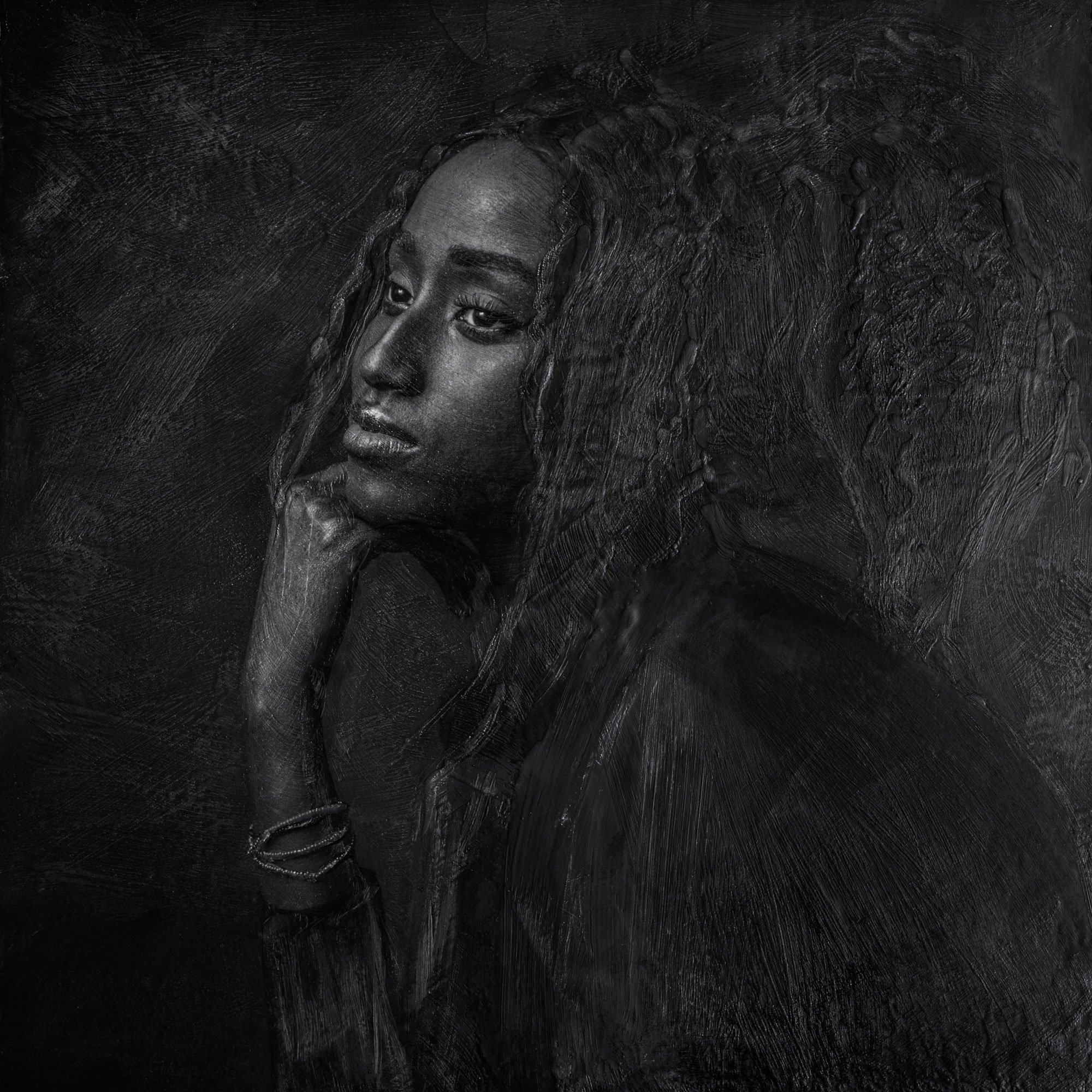
So I usually send them to the work. Not as proof that I know everything, but as an invitation to look. To see whether they recognize care in the images. To see whether the people in front of my camera appear diminished or fully present. Because before someone trusts me with their image, they have the right to know how I see.
Why the Finished Portrait Matters
This is why a photograph is not decoration. Exposure, light, tone, print, paper, and interpretation are not neutral decisions. They shape whether a person feels revealed or diminished. A portrait is never only a picture. It is a relationship made visible.
A digital image can be adjusted, replaced, sent again, forgotten. We accept that it is unstable. One screen is too bright, another too blue, another too flat. It does not fully belong to itself. A print is different. A print is final. Once it is made, it has to stand. The tone, the paper, the light, the way the person appears — all of it matters because there is no hiding behind the screen anymore.
When it is fully realized, a portrait can enter legend. The Mona Lisa is perhaps the most obvious example. A portrait in your home is not only how someone is remembered, or an image a child carries. It is the representation of a feeling, a character, and an era.
That is not ornamentation. That is memory made visible.
The Responsibility of the Gaze
I cannot escape bias. No one can. But I can name it. I can know what I am bringing into the room, and I can hold it up to the light instead of pretending the frame is neutral. That is the difference — not the absence of bias, but the refusal to hide from it.