
Exhibited in Montreal,
2011 Café des Arts, Marché Bonsecours
On view for two years
A photographic body of work on trust, presence, and the quiet power of leading without control.
Before I understood why horses mattered to my work, there was Princesa.
She was a horse I loved as a child in the Dominican Republic. I trained her myself from the time she was young, on my parents’ land. The relationship I had with her was the kind of relationship a child has with an animal: complete, unquestioned, and full of trust.
One day, she fell. She broke her neck. She did not survive.
I have not ridden a horse since.
For years, I carried something I did not yet know how to name. I would think of her, of the time we had together, and eventually a question would arrive: was the bond real? Or had I imagined it?
We ask a great deal of horses. We ask them to carry us, to trust us, to wait, to follow, to respond. We speak of connection, but the horse cannot explain itself in words. It answers through the body. Through resistance. Through softness. Through the invisible truth of what is present.
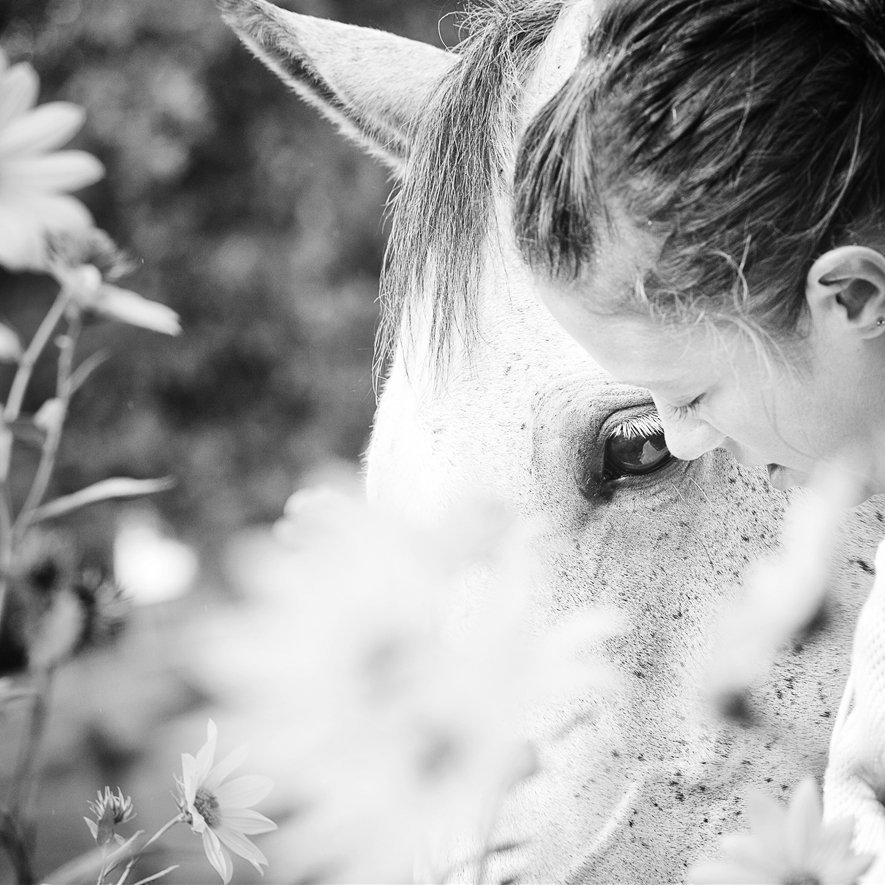
From The Horse, My Teacher, exhibited in Montreal at Café des Arts, Marché Bonsecours.
Years later, I began photographing horses and riders. At first, it began as curiosity. I wanted to understand the relationship between a horse and the person beside it. Was it partnership? Was it control? Was it affection? Or was it something more complex than any of those words could hold?
Then I met people whose connection with their horses immediately stood out. There was no visible force, no obvious command, no performance. What I saw instead was a kind of understanding that felt almost invisible, but undeniably present.
That stayed with me.
Trust Cannot Be Forced
Eventually, I came across the work of Chris Irwin, whose way of understanding horses changed something in me.
His teaching challenged the idea that the rider is simply in control. He understood that a horse does not respond only to instruction. It responds to pressure, hesitation, intention, fear, clarity, and contradiction. Everything unspoken is understood.
You cannot hide uncertainty from a horse.
You cannot force trust.
A horse reflects what is there, not what you pretend is there.
This was the revelation. The horse was not merely being trained. The horse was revealing the human being beside it: their impatience, their need to dominate, their insecurity, their ability to listen, their capacity to create safety.
And when control begins to settle, something else becomes possible.
Trust. Clarity. Collaboration. Stillness.
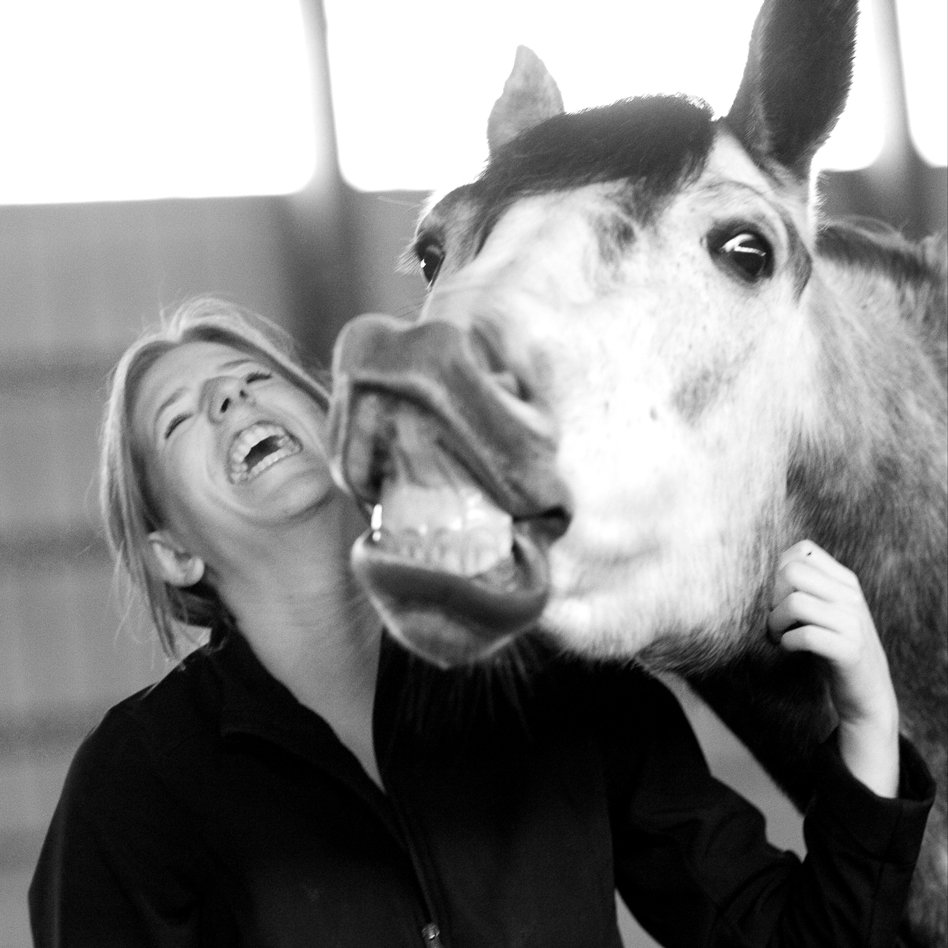
Melissa & Skylar, from The Horse, My Teacher.
Melissa & Skylar
Melissa and Skylar became central to my understanding of this work.
What moved me was not the image of a rider controlling a horse. It was the opposite. It was the subtle exchange between them — the space, the listening, the way trust seemed to exist before movement.
With horses, authority does not become meaningful because it is imposed. It becomes meaningful when it creates safety. The horse does not surrender to force. It responds to coherence.
That changed the way I understood leadership.
And eventually, it changed the way I understood portraiture.
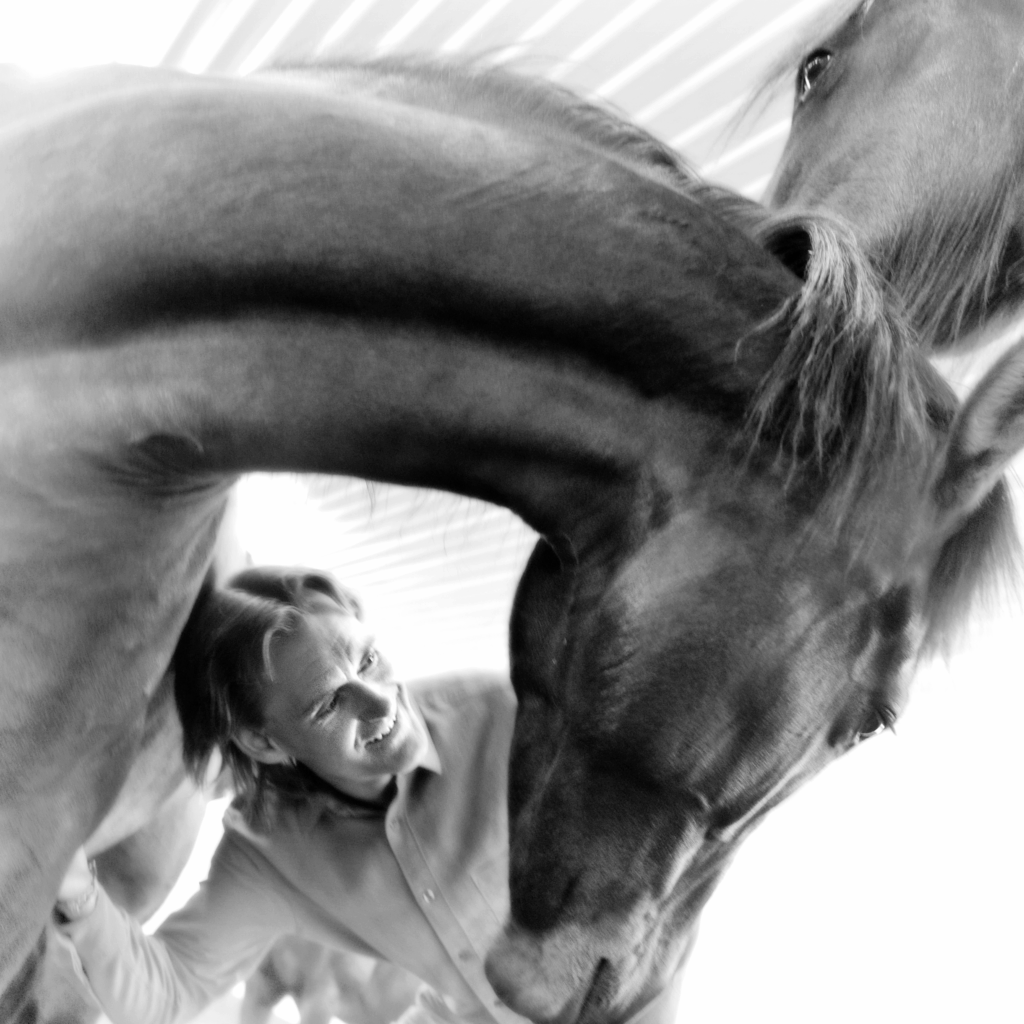
From The Horse, My Teacher, a photographic study of trust, presence, and human-animal connection.
What the Horse Taught Me About Portraiture
Over time, I began to see that a person in front of the camera is not so different.
They respond to what is present, not only to what is said. If there is pressure, they close. If there is performance, they perform. If there is fear, the body protects itself. But when there is attention without force, something real begins to appear.
This realization shifted my entire practice.
I stopped thinking of photography as something I had to extract from people. I began to understand it as something that emerges when trust is present. The work is not to dominate the moment, but to create the conditions where the subject can remain fully themselves.
That is what the horse taught me.
Not how to control.
How to listen.
Exhibition
The Horse, My Teacher was exhibited in Montreal at Café des Arts, located in Marché Bonsecours, beginning in 2011. The work remained on view for two years, giving the series a sustained public presence and placing it within a cultural and fine art context.
The exhibition marked an important moment in my practice. Long before I had the language I use today, this project was already pointing toward the foundation of my work: presence, trust, attention, and the quiet dignity that appears when control gives way to relationship.